Organizational Context
A large public sector technology organization was expanding its use of Azure DevOps as the primary platform for managing work across both application development and infrastructure teams.
Although Azure DevOps provided powerful capabilities for backlog management, sprint planning, and work tracking, implementation practices varied widely across teams. Each group structured their boards, work items, and reporting differently, which made it difficult for leadership to understand delivery performance across the organization.
As adoption increased, leadership recognized that the tool alone would not provide enterprise insight without consistent governance and structured reporting.
Strategic Challenge
Executive leadership needed reliable visibility into enterprise technology delivery in order to manage priorities, staffing, and risk.
However, several factors limited their ability to gain meaningful insight:
- inconsistent Azure DevOps work item structures across teams
- lack of standardized sprint cadence and iteration schedules
- fragmented reporting approaches across projects
- limited visibility into workload and capacity across teams
- difficulty aggregating delivery data for portfolio-level reporting
Without consistent governance and reporting structures, leadership could not accurately assess delivery capacity, prioritize work effectively, or identify emerging risks across the portfolio.
Leadership Role
Supported the design and implementation of governance structures for Azure DevOps usage across the organization to improve delivery transparency and portfolio visibility.
Key contributions included:
- helping establish standardized sprint cadence aligned with the fiscal year
- supporting governance models for work item structure and backlog management
- contributing to the development of capacity planning frameworks
- supporting the creation of enterprise delivery reporting through Power BI
The goal was to ensure Azure DevOps functioned not only as a team-level project tool, but as a platform supporting enterprise delivery intelligence.
Solution Framework
The governance approach focused on introducing structure and consistency while allowing teams to maintain operational flexibility.
Standardized Sprint Cadence
A consistent sprint calendar was introduced to improve coordination across projects and teams.
Key elements included:
- organization-wide two-week sprint cycles
- standardized sprint naming conventions aligned to the fiscal year
- improved coordination of planning activities across teams
This allowed leadership and project teams to coordinate delivery timelines more effectively and improved comparability of delivery progress across initiatives.
Delivery Data Standardization
To improve reporting consistency, governance guidelines were introduced for how teams structured their Azure DevOps data.
These guidelines included:
- consistent work item types and usage
- standardized backlog structures
- defined reporting expectations for delivery status
These practices allowed delivery data to be aggregated and analyzed across projects.
Capacity Planning Framework
A capacity planning model was introduced to improve visibility into workload demand relative to available resources.
This included:
- sprint-level capacity reporting
- visibility into team workload commitments
- improved understanding of delivery constraints
These practices enabled leadership to make more realistic prioritization decisions and helped teams plan work more effectively.
Enterprise Delivery Visibility with Power BI
To translate Azure DevOps operational data into meaningful leadership insight, delivery data was integrated with Power BI dashboards.
Power BI reporting provided leadership with real-time visibility into:
- portfolio workload and initiative progress
- sprint completion trends across teams
- resource capacity versus demand
- emerging delivery risks and bottlenecks
These dashboards allowed leadership to move beyond anecdotal status updates and instead evaluate delivery performance using consistent operational metrics derived directly from Azure DevOps.
By connecting Azure DevOps data with Power BI reporting, the organization gained a unified view of delivery activity across teams, programs, and portfolios.
Delivery Visibility Architecture
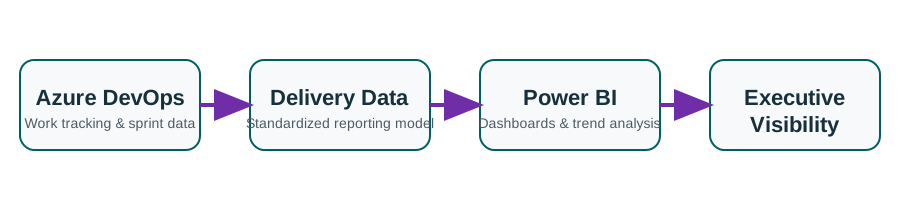 Azure DevOps delivery data standardized for reporting and surfaced through Power BI dashboards for executive portfolio visibility.
Business Impact
The governance framework significantly improved delivery transparency across the organization.
Key outcomes included:
- improved visibility into enterprise technology delivery workloads
- consistent sprint cadence across development and infrastructure teams
- executive dashboards providing portfolio-level delivery insight
- stronger alignment between project demand and available capacity
- improved ability for leadership to identify delivery risks early
The integration of Azure DevOps operational data with Power BI reporting transformed delivery reporting from fragmented team updates into a structured enterprise delivery intelligence capability.
Leadership Capabilities Demonstrated
This initiative highlights several areas of enterprise delivery leadership:
- Delivery System Modernization
- Azure DevOps Governance Design
- Enterprise Capacity Planning
- Portfolio Visibility and Reporting
- Power BI Delivery Intelligence
- Cross-Team Delivery Coordination
Executive Takeaway
Modern delivery platforms such as Azure DevOps can only provide meaningful organizational insight when supported by consistent governance and structured reporting.
By introducing sprint cadence standards, delivery data governance, capacity planning frameworks, and Power BI executive dashboards, the organization transformed Azure DevOps from a team-level work management tool into a platform supporting enterprise-level delivery visibility and informed leadership decision-making.